Zvolte jazyk

  • Úvod
  • Publikace
  • A comparative study of socio-economic segregation in European capital city-regions: From segregation to desegregation?

A comparative study of socio-economic segregation in European capital city-regions: From segregation to desegregation?

Ubarevičienė, R. - Tammaru, T. - van Ham, M. - Basílio Junior, L. - Bērziņš, M. - Credit, K. - Gaspar Silva, D. - Harris, R. - Kalm, K. - Kauppinen, T. - Krišjāne, Z. - Malheiros, J. - Maloutas, T. - Manley, D. - Musterd, S. - Nel·lo, O. - Nevanto, M. - Novotný, L. - Ouředníček, M. - Porcel, S. - Ribardière, A. - Šimon, Martin - Smętkowski, M. - Spyrellis, S. - Strömgren, M. - van Gent, W. - Wessel, T. 2025. „A comparative study of socio-economic segregation in European capital city-regions: From segregation to desegregation?“. Urban Studies. First online 21 November (2025). ISSN 1360-063X. [cit. 24.11.2025]Dostupné z: https://asep.lib.cas.cz/arl-cav/cs/gwext/?url=https%3A//journals.sagepub.com/doi/10.1177/00420980251378028&type=extlink

Stáhnout PDF

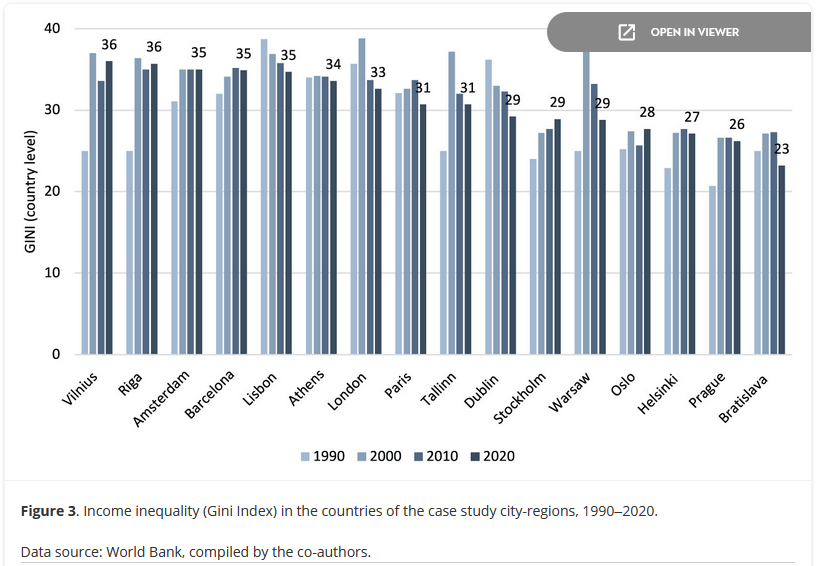
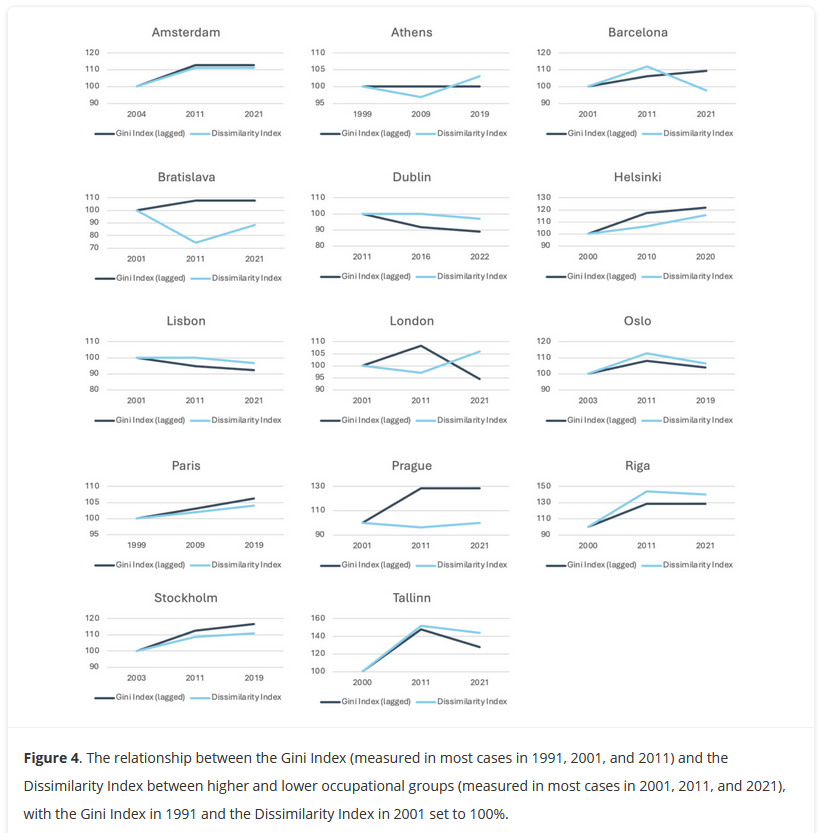
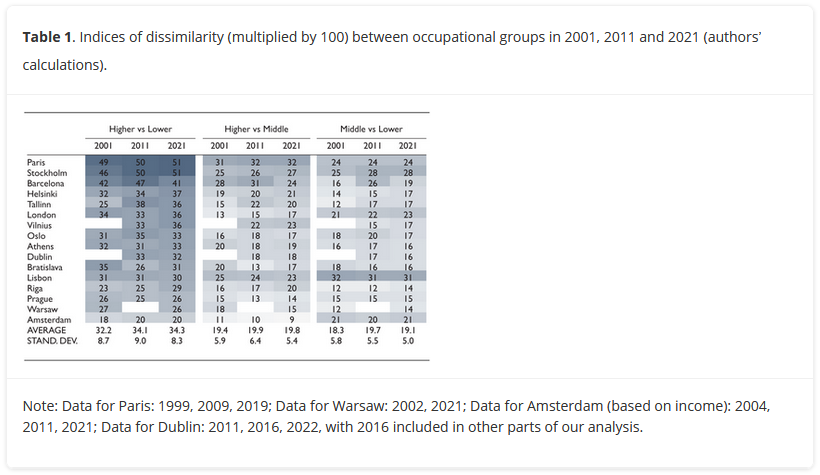
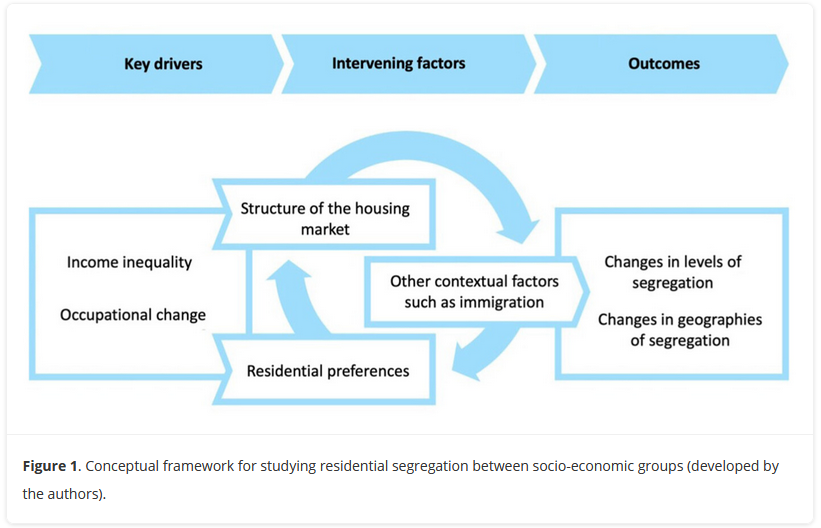
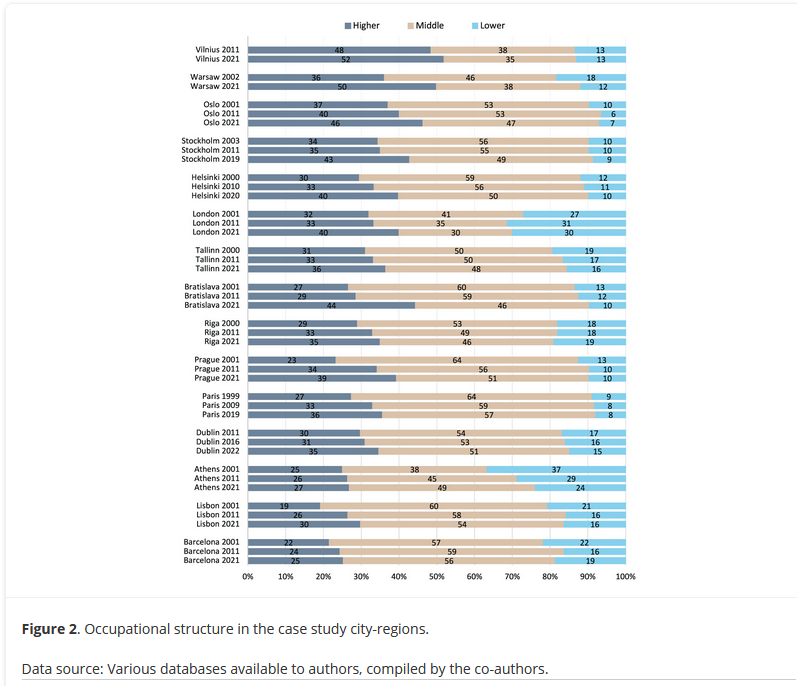
Previous research based on 2001 and 2011 census data indicated rising levels of residential segregation between socio-economic groups in many large city-regions in Europe as well as globally. Rising segregation is an important societal concern, as place of residence plays a crucial role in shaping access to urban opportunities. Residential isolation can be especially harmful for the most vulnerable groups. Income inequality was identified as the primary driver of this segregation. The current paper extends comparative research on residential segregation in Europe by incorporating the latest 2021 census and register-based data to determine whether segregation levels have continued to rise or have peaked, or whether there are signs of desegregation. It also examines how changes in segregation align with shifts in income inequality and occupational structures. A comparative analysis of 16 European capital city-regions shows a slowdown in the rise of segregation, with some city-regions transitioning from segregation to desegregation. These changes coincide with both a slowdown in the growth of income inequality and increased professionalisation of the workforce. The study suggests that future research should focus on the mechanisms driving residential desegregation in different urban contexts, with particular attention to the diversification of residential patterns among the expanding professional class.

Autoři

Oddělení

Témata

Bydlení, Důvěra/Sociální koheze, Ekonomie, Město a vesnice, Migrace a mobilita, Mzdy a příjmy, Sociální nerovnosti, Životní úroveň
Fotogalerie

Newsletter

Pokud máte zájem o newsletter s novinkami našeho ústavu, zanechte nám váš e-mail. Odesláním formuláře vyjadřujete souhlas se zpracováním osobních údajů.

Bluesky

Nově nás naleznete také na Bluesky.